The Kink Test
A private kink test for adults: 30 short statements, about 5 minutes, no account. Rate what fits you today and get a six-axis preference map, scored in this tab.
18+ · Private · Not a consent agreement
In short: KinkWeave’s kink test is 30 short statements you rate from Not me to Very me, scored in your browser into six independent preference axes: Leadership, Surrender, Sensation, Structure, Exploration and Connection. It is free, for consenting adults aged 18 or older, needs no account, and lets you skip any question; your answers stay in this tab and are not uploaded to a server.
This guide explains the 30 questions, six preference axes, and scoring behind KinkWeave’s private kink test. It is for consenting adults aged 18 or older. Use it to understand your answers, with room for uncertainty and without treating a result as an instruction.
Taking this with someone? Your answers stay private. You choose what to share afterward.
What the questions can help you notice
Sometimes it is easier to notice a preference than to explain it. The kink test gives you a consistent set of prompts and a vocabulary for comparing your own responses. You might notice an interest in guidance, shared routines, sensory detail or emotional warmth. You can use those observations to start a conversation, or simply reflect on them privately.
You do not need to aim for an unusual result. Familiar preferences, low interest and uncertainty are all possible responses. Answering honestly is more useful than choosing what you think a particular type of person would say.
Searching for a kink test list, a kink jars test or a kink compatibility test (sometimes typed as kint test)? This kink test is none of those. It does not hand you a long checklist of named kinks, and it is not a kink compatibility test that scores two people against each other. It maps your own answers onto six themes.
If you want vocabulary before you answer, start with the kink list. After a result, an optional AI conversation guide can help you draft words. The free report does not depend on it.
Kink test questions: how answering works
There are 30 questions and five choices, from Not me to Very me. Think about what might appeal to you today in a freely chosen interaction between adults. You do not need experience, a current partner, or a particular identity. Everyone remains free to pause, decline, or change their mind.
I like proposing a direction for an interaction we both want.
You can also choose Prefer not to answer. There is no recommended response.
Tap a choice to move to the next question. With a keyboard, choose with the arrow keys and use Continue. You can return to earlier questions and change an answer. The last question waits for you to choose See my results.
Use Unsure when you are uncertain. Use Prefer not to answer to leave a question unscored, then Continue. Skipping is always available; it is not treated as a low score.
Six independent preference axes
- Leadership
- Interest in taking a mutually agreed leading role.
- Surrender
- Interest in freely choosing to receive guidance.
- Sensation
- Interest in textures, atmosphere, and comfortable sensory detail.
- Structure
- Interest in knowing what to expect, having agreed roles, or sharing familiar rituals.
- Exploration
- Interest in thinking about new ideas or changes that everyone involved welcomes.
- Connection
- Interest in emotional warmth and a sense of togetherness.
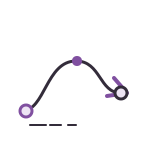


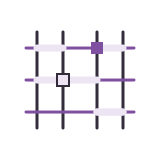


Leadership and Surrender are separate axes. Enjoying one does not reduce the other. Neither a leading nor a following role creates consent or removes the right to stop.
Reading your kink test results
Each axis has five questions. At least four need a scored answer before that axis can show a number. The 0–100 index summarizes your ratings; it is not a percentage of people, a probability, or a validated clinical score.
Unsure uses the arithmetic midpoint. A middle score can therefore reflect uncertainty, not moderate interest. The result shows how many questions you answered and how many were Unsure.
A complete set of axis scores produces a radar and a provisional named pattern. Similar scores, tied leading scores, or lower ratings may produce The Open Sketch. If an axis has too few answers, you receive a partial map with a list and a way to return to skipped questions. Missing scores are never drawn as zero.
For a fuller walkthrough, read kink test results explained. Start with answer coverage and the Unsure count, then compare each axis with your own responses rather than with another person. The named pattern is a shorthand for one visible shape, not a permanent type. Keep language that helps you reflect, and set aside anything that does not fit.
The Attentive Connector
In these answers, emotional warmth and togetherness scored highest. A mutually agreed leading role, sensory detail and welcome possibilities and variations also scored high on the 0–100 scale. This is not a measure of empathy, relationship health, or anyone’s ability to give consent.
An example of a middle score
If you choose Unsure for all five questions on an axis, its arithmetic score is 50. That does not establish moderate interest: it records five uncertain answers. Two people can receive the same number for different reasons, which is why the explanation and answered-question count matter alongside the score.
Read a higher score as a theme that appeared in your answers, not an instruction. If a description does not fit, you can review the answers, keep only the wording that feels useful, or leave the result behind. A named pattern does not override your own preferences.
Common questions about the test
Is this a diagnosis or a scientific personality test?
No. These are editorial questions and descriptive scoring rules, without clinical validation or population norms. A result is a reflection on the answers you gave today, not a permanent identity, a measure of consent skills, or a prediction of relationship compatibility.
Do I need to have tried anything?
No. You can answer about what sounds appealing, choose Unsure, or skip. Imagining an idea is not agreeing to do it.
How is this different from a kink jars test or a long kink list?
Some kink tests, often called jar or catalog tests, ask you to rate a long list of named kinks. This kink test asks 30 short statements about six broad themes, needs no account, and keeps your answers in this tab. If you would like names for the themes first, browse the kink list. A rating on any test is never consent.
What happens if I leave and come back?
Moving between pages of this site in the same tab keeps your progress in memory. Refreshing or closing the tab clears it. There is no account or saved report to restore. You can also use Clear answers at any time.
Can I share the result?
You can invite someone without attaching your results, or preview a summary and choose up to two axes to share as text or an image. Your result name and summary also reveal preferences. The link opens this quiz, not your saved result. A full private note is still available to copy. Raw answers are never included. Choose what you share and who sees it.
Is this the same as a BDSM test?
People sometimes use these search terms interchangeably. KinkWeave describes six broad preference axes, rather than presenting a catalogue of BDSM roles. There is no separate BDSM assessment available here.
Does the result use AI?
No. Scoring stays in this tab. The optional guide sends only a summary you select, after you confirm. You can ignore it and still keep the full report.
How long does the kink test take?
There is no timer. Many people can read and answer 30 short statements in a few minutes, but taking longer is fine. Pause to consider context, choose Unsure when that is accurate, or skip any question you prefer not to answer. Speed does not improve the score, and you do not need to finish simply because you started.
What are my kinks?
If you are asking what are my kinks, the honest answer is that only you can decide. This kink test gives you 30 short statements and a six-axis map of what appeals to you today, so you can notice patterns and find words for them. Your kinks can change, and no result is an instruction or consent.
What kinks do I have?
Asking what kinks do I have is a common question among adults. A quiz cannot list your kinks for you, but it can help you reflect: rate short statements, skip anything you prefer, and see which of six preference themes stand out. Treat the result as vocabulary for your own kinks, not a fixed label.
Read the privacy explanation and terms. A quiz never replaces direct communication about preferences, boundaries, and consent.
Looking for an experience checklist instead? The Rice Purity Test counts listed experiences; this test reflects preferences. Neither result defines you.